How to Stop Picking Your Cuticles: What Works
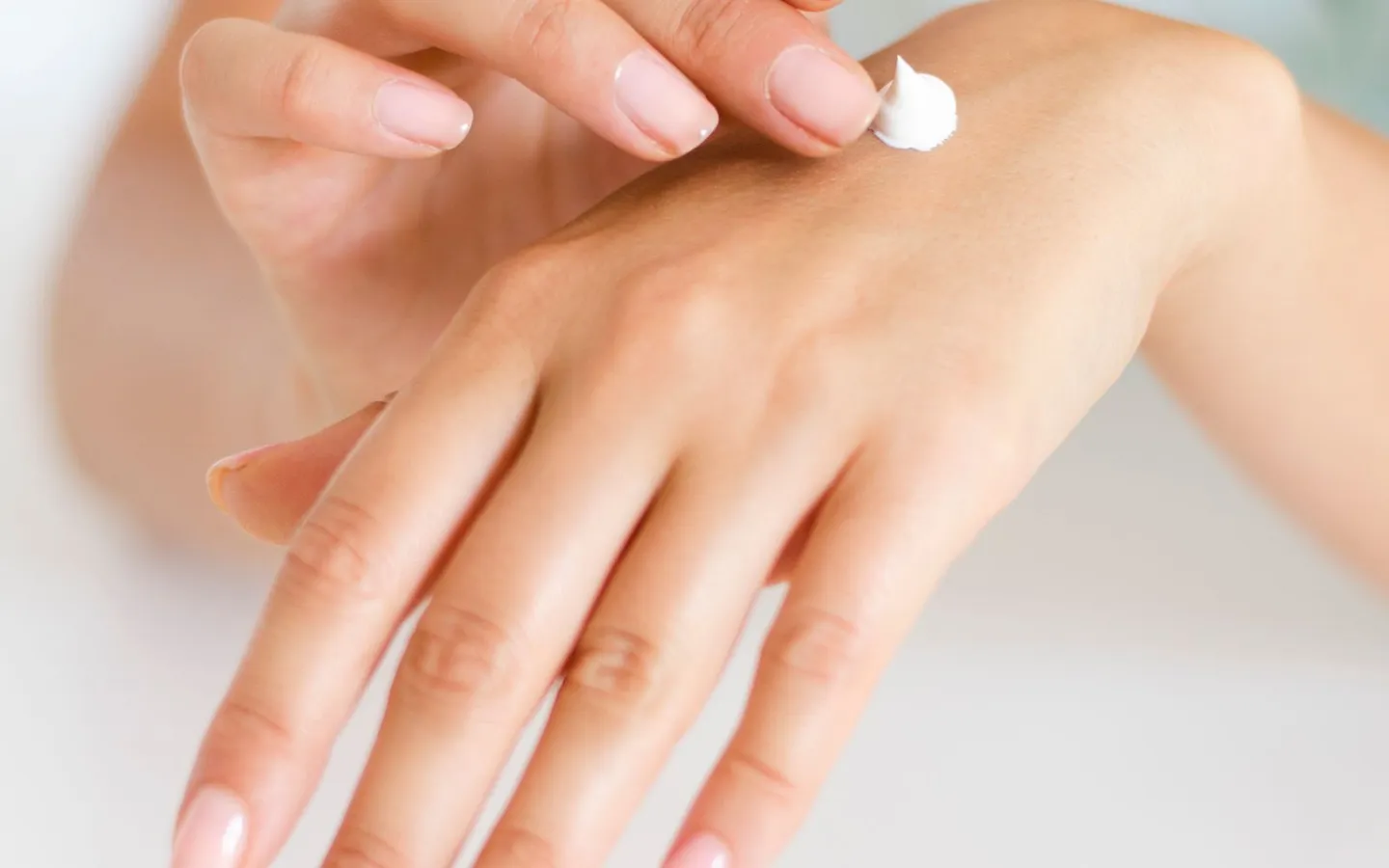
Photo by Linda Prebreza
The fastest way to stop picking your cuticles is to attack the habit from both ends at once: remove the rough edges and hangnails that invite your fingers in (daily moisturizing plus careful trimming), and give the urge itself somewhere else to go (a competing response, barriers on your worst spots, and earlier awareness of the moment your fingers start searching). No single trick works alone, but the combination reliably shrinks the habit, because it stops feeding the loop that keeps it alive.
If your cuticles are your main target, you’re in crowded company. The skin around the nails is one of the most common picking sites, and it sits at the intersection of two well-known body-focused repetitive behaviors: skin picking and nail biting. That also means the strategies with the best evidence for those behaviors apply directly here.
Why cuticles, specifically?
Cuticle picking persists for a simple reason: the trigger regrows daily and travels with you. A hangnail or a ragged edge of dry skin is a built-in imperfection your fingertips can find without looking, and unlike a blemish on your face, it’s available in every meeting, every commute, every episode of whatever you’re watching.
Two features make the nail area uniquely sticky as a habit:
- It’s a tactile habit more than a visual one. Most cuticle picking starts with the fingers scanning each other and snagging on a rough spot. You don’t need a mirror, and you often don’t need awareness.
- Picking creates the next trigger. Every torn edge heals into a slightly raised ridge of new skin, which your fingertips read as the next imperfection. The behavior manufactures its own future targets.
That second point is why “just stop” fails. As long as there is something to find, searching fingers will find it. So the plan below starts with the skin itself.
Cuticle picking overlaps with skin picking and nail biting
Cuticle picking isn’t its own diagnosis; clinicians treat it as part of the skin picking spectrum, and when it’s aimed at the nail itself, it has a name (onychotillomania, the picking cousin of nail biting). In practice, most people mix behaviors: biting one hangnail, tearing the next, chewing a nail edge while reading.
That mix matters for strategy. If your fingers go to your mouth, the approaches in our guide to stopping nail biting apply. If you also pick skin elsewhere (scalp, face, arms), the broader plan in how to stop picking your skin is worth reading alongside this one. The core loop is the same; only the target differs.
How to stop picking your cuticles: remove the trigger first
The highest-leverage move is unglamorous: make your cuticles boring. Smooth, moisturized skin with nothing to snag gives your fingers nothing to start on.
Moisturize like it’s the actual treatment (it is)
Dry skin cracks, frays, and produces hangnails. The American Academy of Dermatology recommends moisturizing after hand washing and warns against biting nails or removing the cuticle, because doing so damages the nail. Practical version:
- Keep hand cream or cuticle oil at the places you actually sit: desk, nightstand, car, bag. Friction kills follow-through.
- Apply after every hand wash and before bed. Petroleum jelly or a thick balm overnight does more than an expensive oil used twice a week.
- In winter or dry climates, expect to double the frequency. Hangnail season is real.
Trim snags flush, don’t tear them
When a hangnail appears, remove it properly before your fingers do it badly. Use small, clean nail scissors or clippers and cut the snag flush with the skin. Carry a travel clipper; the entire point is to beat the urge to the target.
Two cautions from the Cleveland Clinic: don’t pick at your cuticles, and when trimming, avoid cutting too close to the nail fold. The cuticle is a seal that keeps bacteria out of the nail root. Your goal is removing loose edges, not removing the cuticle.
Give the urge somewhere else to go
Removing triggers handles the supply side. The demand side, the restless energy in your fingers, needs its own plan, and the best-studied tool is the competing response from habit reversal training (HRT).
A competing response is a brief action that’s physically incompatible with picking: press your thumb against the pad of a finger, make a loose fist for 60 seconds, grip a pen, press your palms flat on the desk. The moment you notice your fingers scanning, you run the replacement instead.
This isn’t folk advice. In a randomized controlled trial of 334 people with BFRBs, self-help training in habit reversal and a related technique called decoupling reduced symptoms significantly more than a waitlist, with medium effect sizes, over just six weeks of manual-based practice. You still benefit from a therapist if the habit is severe, but the mechanics are learnable on your own.
Keep a fidget within reach for long sitting stretches (a smooth stone, putty, a textured ring). It gives your fingertips the sensory input they’re hunting for without costing you skin.
Use barriers on your worst fingers
Barriers work by adding a speed bump between urge and damage. They’re especially useful at the start, while healing skin is still producing tempting edges:
| Barrier | Best for |
|---|---|
| Small bandages or hydrocolloid wraps on 1-2 problem fingers | Breaking a hot streak on a specific spot |
| Thin gloves during TV, reading, or commuting | Automatic evening picking |
| A manicure or polished nails | Raising the cost of wrecking your own work |
| Keeping nails short and edges filed smooth | Removing the tools that do the tearing |
Barriers alone rarely end the habit, because the urge just waits them out. Pair them with the competing response and the moisturizing routine, and they buy your skin the healing time it needs.
Build awareness of the searching moment
Most cuticle picking is automatic rather than focused: it starts while your attention is on a screen, a call, or a page, and you surface minutes later mid-tear. You can’t interrupt a behavior you never notice starting, which is why awareness training is the first step of HRT.
Low-tech options help: sticky-note reminders on your monitor, a rubber band on the wrist as a physical anchor, or asking a partner to name it neutrally when they see it. If most of your picking happens at a computer, gentle real-time feedback can shortcut weeks of awareness practice. Hands Down, a macOS menu bar app, quietly notices when your hands drift into picking position at your desk and nudges you in the moment, using the camera entirely on-device, with nothing recorded or uploaded.
The point of any of these isn’t surveillance or shame. It’s moving the moment of noticing earlier: from “mid-tear” to “fingers scanning,” where the competing response actually has a chance to run.
Let the skin heal (and know the infection signs)
Picked cuticles aren’t just cosmetic. The Cleveland Clinic notes that picking at cuticles creates tiny cracks where bacteria and fungi can enter, causing paronychia, a common and painful nail fold infection.
Basic care while you heal:
- Wash torn spots with soap and water, then keep them moisturized.
- Cover open or raw areas with a bandage (this doubles as a barrier).
- Watch for redness, swelling, warmth, or pus around the nail. Those are paronychia signs worth a call to a clinician, especially if they don’t improve in a few days.
Healing also has a psychological payoff: every day the skin gets smoother, there’s less for your fingers to find, and the habit loses fuel. Expect visible improvement within one to two weeks of reduced picking.
When it’s more than a habit
For some people, cuticle picking is a minor tic. For others, it’s part of excoriation disorder (dermatillomania), a recognized condition in which picking causes real damage and distress. It’s more common than most people assume: in a study of over 10,000 U.S. adults, about 2 percent currently met criteria for skin picking disorder and around 3 percent had experienced it in their lifetime.
Signs you’ve crossed from habit into BFRB territory: you’ve tried repeatedly to stop and can’t, you pick past the point of bleeding or pain, you hide your hands or avoid activities because of them, or picking is your main response to stress. None of that means something is wrong with you. It means the behavior deserves real treatment, and treatment works: the Cleveland Clinic lists habit reversal training and related therapy, sometimes with medication, as effective options. A therapist familiar with BFRBs (the TLC Foundation for BFRBs maintains a directory) is the right next step.
Start small this week: put a hand cream where you sit most, clip hangnails flush the moment they appear, and pick one competing response to practice. Smooth cuticles are quiet cuticles, and quiet cuticles are much easier to leave alone.